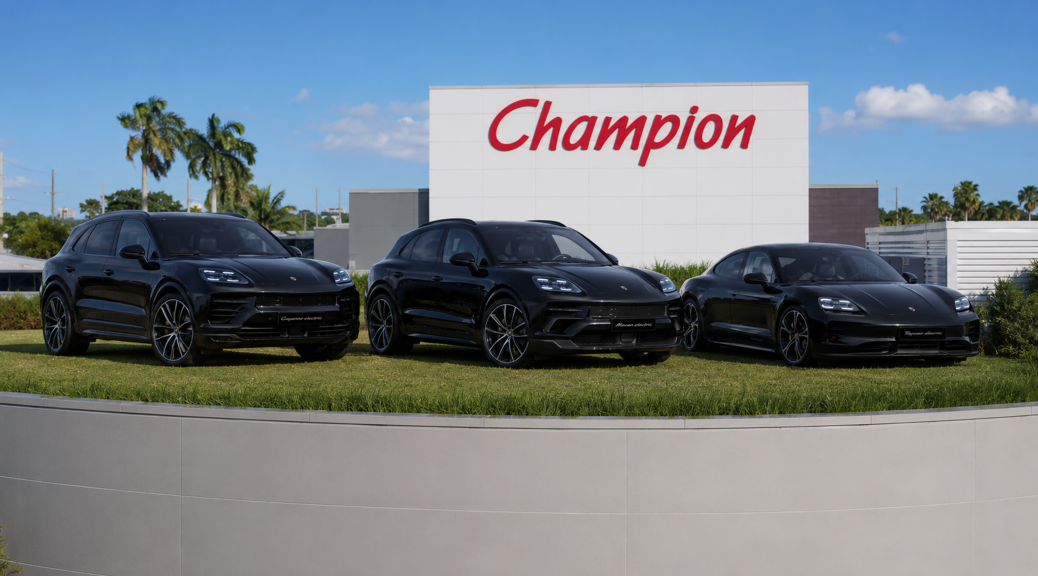
“Updated Sept. 2026: 2027 Macan Electric and Taycan pricing, the 2026 Cayenne Electric lineup, range, charging, and Florida ownership costs.”
2026–2027 Porsche EV Lineup: Macan Electric, Taycan & Cayenne Electric Prices, Range & Specs
Porsche’s transition to electric mobility isn’t about compromise—it’s about evolution. The Stuttgart automaker has engineered its battery-powered models to deliver the same adrenaline-pumping dynamics that define the brand, now with zero tailpipe emissions and instant torque delivery.
For South Florida drivers navigating I-95, A1A, or the daily commute through Fort Lauderdale and Miami, understanding the investment required for a Porsche EV means looking beyond the sticker price. It means evaluating range, charging infrastructure, performance capabilities, and long-term ownership value.
The current Porsche electric portfolio centers on three distinct platforms: the Taycan—the groundbreaking sports sedan that proved electric cars can dominate the track—the Macan Electric—the brand’s first fully electric SUV built on the new Premium Platform Electric (PPE) architecture—and the all-new Cayenne Electric—the most powerful Porsche SUV ever created.
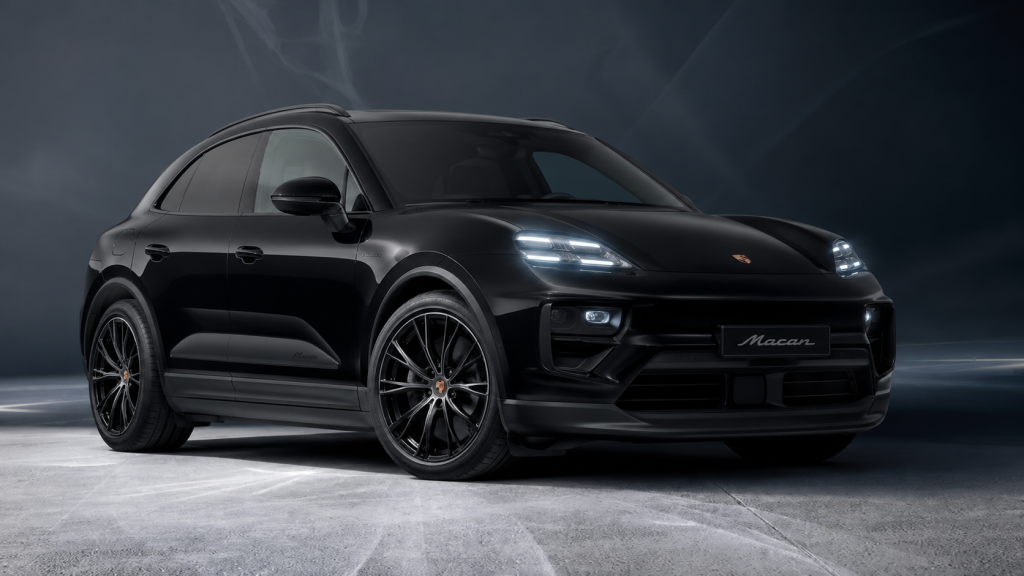
2026 Porsche Macan Electric: The SUV Reimagined
The Macan Electric represents Porsche’s most significant EV volume play. As the brand’s bestselling nameplate globally, the transition to electric power for this compact luxury SUV signals where the market is heading.
Trim Level Breakdown and Manufacturer Pricing
| Trim | Starting MSRP | Power Output | 0–60 mph | EPA Range |
|---|---|---|---|---|
| Macan Electric (Base) | $80,300 | 355 hp | 5.4 sec | 332 miles |
| Macan 4 Electric | $84,000 | 402 hp | 4.9 sec | 324 miles |
| Macan 4S Electric | $89,900 | 509 hp | 3.9 sec | 290 miles |
| Macan GTS Electric | $105,300 | 563 hp | 3.6 sec | 294 miles |
| Macan Turbo Electric | $112,700 | 630 hp | 3.1 sec | 288 miles |
What the base price delivers: Even the entry-level Macan Electric comes equipped with a 100.0-kWh battery pack (94.9 kWh usable), rear-wheel drive, and DC fast-charging capability up to 270 kW. In ideal conditions, charging from 10% to 80% takes approximately 21 minutes. The base model achieves an EPA-estimated 332 miles of range—the highest in the Macan Electric lineup—making it the efficiency champion for daily drivers.
Performance escalation: Moving up the trim ladder adds dual-motor all-wheel-drive configurations, increased power outputs, and enhanced chassis components. The Turbo variant’s sub-3.1-second 0–60 mph acceleration places it in supercar territory, while the GTS balances track-ready capability with everyday usability.
Real-world transaction prices: Kelley Blue Book reports national fair purchase prices ranging from approximately $77,100 for the base model to $112,000 for the Turbo, suggesting room for negotiation depending on market conditions and inventory levels.
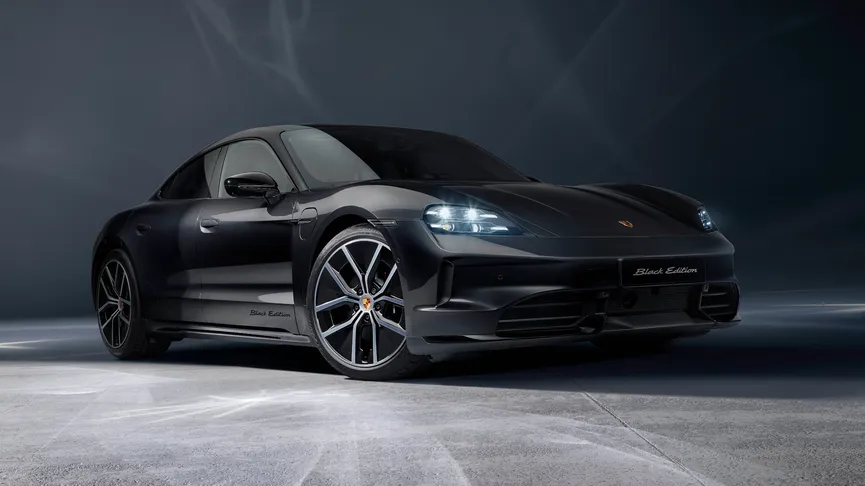
2026 Porsche Taycan: The Electric Sports Car Benchmark
Before the Macan Electric arrived, the Taycan established Porsche’s electric credibility. Now in its evolved form for 2026, the Taycan continues to set the standard for driving engagement in the EV segment.
Model Range and Investment Levels
| Variant | Starting MSRP | Power Output | 0–60 mph | EPA Range |
|---|---|---|---|---|
| Taycan (Base) | $105,800 | 402 hp | 4.5 sec | 274 miles |
| Taycan 4 | $109,900 | 402 hp | 4.4 sec | 251 miles |
| Taycan Black Edition | $122,800 | 429 hp | 4.5 sec | 274 miles |
| Taycan 4S | $125,900 | 536 hp | 3.5 sec | 252 miles |
| Taycan 4 Black Edition | $126,800 | 429 hp | 4.4 sec | 251 miles |
| Taycan 4S Black Edition | $141,000 | 590 hp | 3.5 sec | 252 miles |
| Taycan GTS | $157,000 | 690 hp | 3.1 sec | 293 miles |
| Taycan Turbo | $184,600 | 871 hp | 2.5 sec | 292 miles |
| Taycan Turbo S | $221,400 | 938 hp | 2.3 sec | 261 miles |
| Taycan Turbo GT | $243,700 | 1,019 hp | 2.2 sec | 269 miles |
| Taycan Turbo GT w/ Weissach Package | $243,700 | 1,019 hp | 2.1 sec | 269 miles |
The Turbo GT phenomenon: At $243,700, the Turbo GT with the Weissach package represents the pinnacle of Porsche electric performance. With up to 1,019 horsepower available through launch control, it accelerates from 0–60 mph in 2.1 seconds and achieves a top track speed of 190 mph. This isn’t merely transportation; it’s a statement of engineering dominance.
Range reality: EPA estimates for the Taycan span from 251 to 293 miles depending on trim and battery selection. However, Car and Driver’s independent 75-mph highway testing revealed the Taycan 4S delivered 330 miles—beating its EPA rating—while the Turbo GT achieved 270 miles under identical conditions. The optional Performance Battery Plus ($5,980) increases capacity to 105 kWh gross (97 kWh net) and enables DC fast-charging at up to 320 kW.
2026 updates: This year brings an upgraded infotainment system with faster responses, third-party app downloads, and Amazon Alexa integration. Optional Bose and Burmester audio systems now feature Dolby Atmos technology. A new Black Edition package is available for the base Taycan, Taycan 4, and 4S, bundling the upgraded battery, puddle lights, 14-way power seats, lane change assist, 360-degree camera, and Bose surround sound at a value price point.
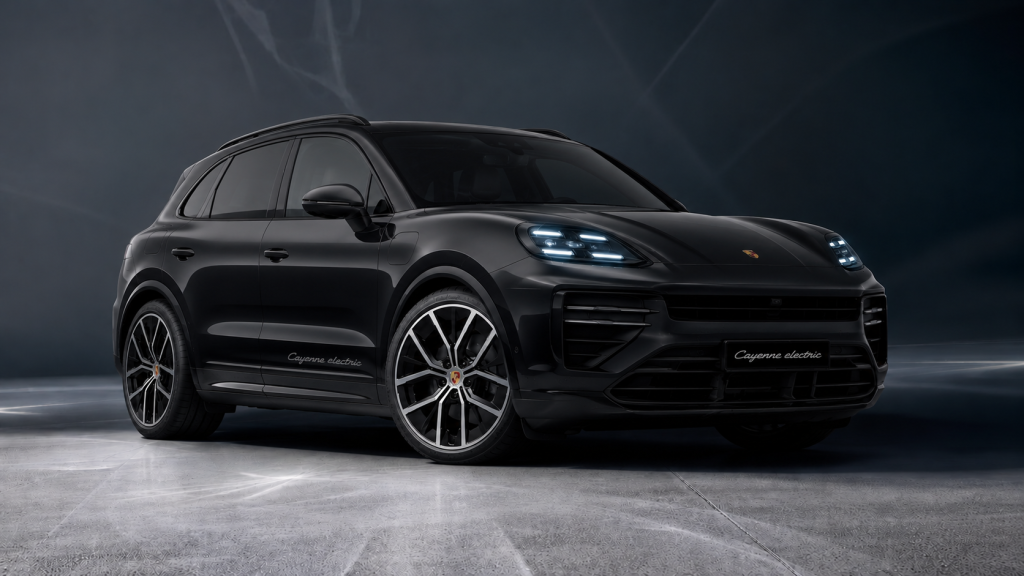
2026 Porsche Cayenne Electric: The Most Powerful Porsche SUV Ever
The all-new Cayenne Electric and Cayenne Coupe Electric mark the next phase of Porsche’s electrification strategy, bringing full electric power to the brand’s most versatile nameplate.
Trim Level Breakdown and Manufacturer Pricing
| Trim | Starting MSRP | Power Output | 0–60 mph | EPA Range |
|---|---|---|---|---|
| Cayenne Electric (Base) | $111,350 | 435 hp | 4.5 sec | 330–340 miles |
| Cayenne S Electric | $128,650 | 657 hp | 3.6 sec | 330–340 miles |
| Cayenne Turbo Electric | $165,350 | 1,139 hp | 2.4 sec | 330–340 miles |
Record-breaking power: The Cayenne Turbo Electric produces 1,139 horsepower and 1,106 lb-ft of torque, making it the most powerful production Porsche ever created—surpassing even the 911 GT3 RS and Taycan Turbo GT. Active aerodynamics featuring deployable aero blades at the rear reduce drag and improve range at speeds above 40 mph.
Charging innovation: The Cayenne Electric features a 108-kWh battery with a peak DC charge rate of 390 kW and will be the first Porsche EV with a standard NACS charging port, enabling access to Tesla’s Supercharger network.
Understanding Total Cost of Ownership
The initial acquisition cost tells only part of the story. South Florida Porsche owners should consider several factors that affect the true long-term investment:
Federal and state incentives: While Porsche EVs may phase out of federal tax credit eligibility based on manufacturer sales caps, Florida offers additional incentives including reduced registration fees and HOV lane access for electric vehicles.
Charging infrastructure costs: Home Level 2 installation (240V) typically ranges from $1,200–$2,500 depending on electrical panel capacity and wiring distance. The Macan Electric’s onboard charging capability serves most daily driving needs, while the Taycan’s 11 kW onboard charger and the Cayenne Electric’s available 19.2 kW option provide faster home replenishment.
Maintenance savings: Electric Porsche models eliminate oil changes, transmission servicing, and many wear items associated with internal combustion engines. Brake wear is significantly reduced thanks to regenerative braking systems.
Insurance considerations: High-performance EVs command higher insurance premiums due to repair complexity and performance capabilities. South Florida’s luxury vehicle insurance market typically sees annual premiums ranging from $3,500–$6,000 for vehicles in this segment.
What Separates Porsche Electric Vehicles from Competitors
In a market crowded with Tesla Model S, BMW iX, and Lucid Air alternatives, Porsche’s electric offerings justify their premium through several distinct attributes:
800-volt architecture: The Taycan, Macan Electric, and Cayenne Electric utilize 800-volt electrical systems—double the industry standard. This enables faster charging, lighter wiring harnesses, and sustained performance during spirited driving. The Taycan can charge from 10% to 80% in 18 minutes under ideal conditions, while the Cayenne Electric achieves similar speeds at up to 390 kW.
Two-speed transmission: Unlike most EVs using single-speed reduction gears, the Taycan employs a two-speed rear transmission. First gear delivers explosive launches; second gear optimizes efficiency and top-speed capability. This mechanical sophistication preserves the connected driving feel Porsche enthusiasts demand.
Track-proven durability: The Taycan Turbo GT holds production EV lap records at multiple circuits. Porsche’s electric powertrains are engineered for repeated high-performance use without the thermal degradation common in lesser EVs.
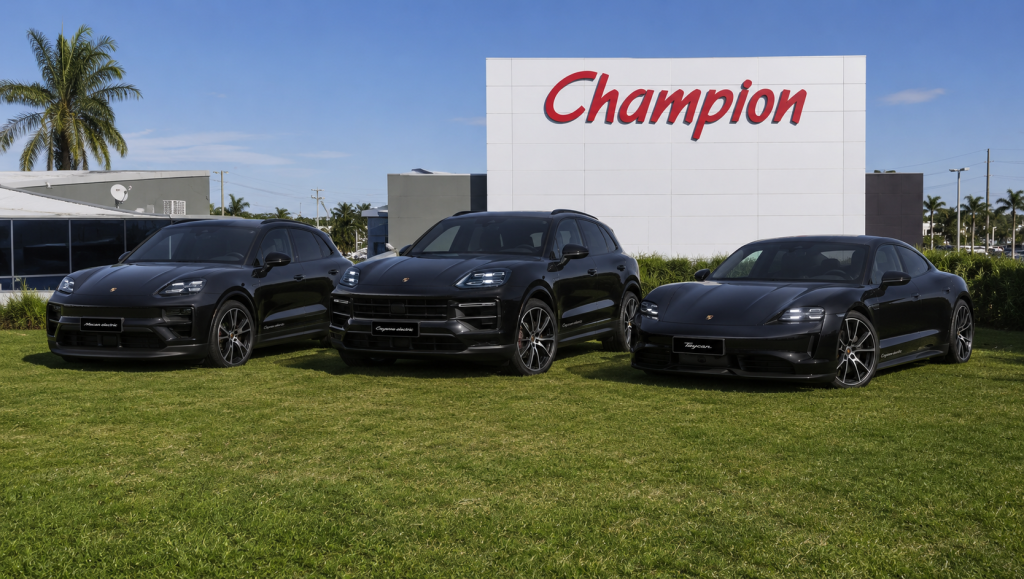
Champion Porsche: Your South Florida Electric Porsche Destination
At Champion Porsche in Pompano Beach, our electric vehicle specialists understand that transitioning to a Porsche EV represents more than a purchase decision—it’s a lifestyle evolution. Our team provides:
- Transparent pricing discussions with no hidden fees or mandatory add-ons
- Home charging consultation to ensure your garage is ready for Porsche electric ownership
- Test drive experiences that demonstrate the performance capabilities defining these vehicles
- Trade-in evaluations for your current vehicle, regardless of brand
The 2026 Porsche electric vehicle lineup offers entry points from $80,300 for the Macan Electric to the exclusive Turbo GT and Cayenne Turbo Electric models exceeding $240,000. Each represents a different expression of Porsche’s electric vision—whether you prioritize efficiency, everyday versatility, or track-dominating performance.
Ready to explore which Porsche electric model aligns with your driving requirements and investment parameters? Contact Champion Porsche today to schedule a personalized consultation and test drive experience. Our product experts will walk you through available inventory, custom order timelines, and configuration options to ensure your electric Porsche exceeds every expectation.
MSRP excludes options, taxes, title, registration, delivery and handling fees, and dealer charges. Dealer sets actual selling price. EPA range estimates vary based on driving conditions, vehicle configuration, and battery state of charge.