From $45,000 to $100,000: Which Porsche delivers the best entry experience, and which mistakes to avoid
The First Porsche Paradox
Porsche builds 25+ distinct models across five vehicle lines, with prices ranging from $65,400 to over $230,000. For the first-time buyer, this abundance creates paralysis. The “cheapest” Porsche isn’t necessarily the best first Porsche. The most powerful Porsche often teaches the wrong lessons.
A good first Porsche balances three factors: attainable cost of entry, forgiving dynamics, and authentic Porsche character. Get this right, and you join a 75-year lineage of sports car engineering. Get this wrong, and you own a depreciating asset that sits in the garage.
This guide examines every viable entry point for 2026, from certified pre-owned bargains to carefully specified new models.
The Budget Realities: What “Entry Level” Actually Costs
Total Cost of First Porsche Ownership (Annual)
| Expense Category | Used Cayman/Boxster | New Macan | Used 911 | New 911 | Used Cayenne |
|---|---|---|---|---|---|
| Purchase/Lease | $45,000–$65,000 | $65,400–$85,000+ | $75,000–$110,000 | $129,950+ | $52,000–$72,000 |
| Insurance | $2,500–$4,000 | $2,000–$3,000 | $3,500–$6,000 | $4,500–$8,000 | $2,200–$3,500 |
| Maintenance | $1,500–$2,500 | $1,000–$1,800 | $2,000–$3,500 | $1,500–$2,500 | $1,800–$2,800 |
| Depreciation | $3,000–$5,000 | $8,000–$12,000 | $5,000–$8,000 | $20,000–$30,000 | $6,000–$9,000 |
| Fuel | $2,500–$3,500 | $2,000–$2,800 | $3,000–$4,500 | $3,500–$5,000 | $2,800–$3,800 |
| Annual Total | $8,500–$15,000 | $13,000–$20,000 | $13,500–$22,000 | $30,000–$48,500 | $12,300–$19,100 |
TLDR: Budget $10,000–$15,000 annually for a used sports car, $15,000–$20,000 for a new SUV, and $30,000+ for a new 911. These are toys, not appliances.
Category 1: The Sports Car Purist
Porsche 718 Cayman or Boxster (2017–2024 Used)
Why It Wins: Mid-engine balance, telepathic steering, manageable power
Specifications (718 Cayman Base):
- Engine: 2.0L turbocharged flat-4, 300 hp / 280 lb-ft
- Transmission: 6-speed manual or 7-speed PDK
- Weight: 2,944 lbs (manual)
- 0–60 mph: 4.9 seconds (PDK), 5.1 seconds (manual)
- New Price: $72,800+ (2026)
- Used Price: $48,000–$65,000 (2019–2022, 20,000–40,000 miles)
The Experience:
The 718’s mid-engine layout provides forgiving handling limits. Unlike rear-engine 911s that punish abrupt throttle lifts with rotation, the Cayman transitions predictably. The steering—hydraulic in early 718s, electric-assist in later—communicates surface texture with precision no competitor matches.
The 2.0L turbo engine generates controversy. Enthusiasts miss the old 2.7L naturally aspirated flat-six’s soundtrack. Practically, the turbo delivers immediate torque from 1,950 rpm, making the 718 faster in real-world driving than its 981 predecessor despite two fewer cylinders.
First Porsche Verdict: The 718 teaches car control without lethal consequences. Its limits are high enough for track days, accessible enough for public roads. The Boxster adds open-air theater; the Cayman adds structural rigidity. Both are correct answers.
Avoid: Base models without Sport Chrono (limits throttle response), early 2017s with known timing chain issues (rare, but verify service history).
Porsche 911 Carrera (991.2, 2017–2019 Used)
Why It Wins: The authentic Porsche experience, depreciation absorbed by first owner
Specifications (991.2 Carrera):
- Engine: 3.0L twin-turbo flat-6, 370 hp / 331 lb-ft
- Transmission: 7-speed manual or 7-speed PDK
- Weight: 3,153 lbs
- 0–60 mph: 4.4 seconds (PDK)
- New Price: $122,095+ (2025) ; $129,950+ (2026)
- Used Price: $85,000–$105,000 (30,000–50,000 miles)
The Experience:
The 991.2 represents the last 911 generation before hybrid complexity. Its twin-turbo 3.0L delivers effortless torque across the rev range, masking the rear-engine weight distribution that defines Porsche character. The PDK transmission—particularly in Sport Plus—executes shifts with violence that startles passengers.
The 911’s rear-engine layout demands respect. Lift abruptly mid-corner, and the pendulum effect rotates the car. This isn’t a flaw; it’s Porsche DNA. The 991.2’s electronic stability systems provide guardrails, but the fundamental physics remain.
First Porsche Verdict: The 911 is aspirational for good reason. For first-time owners, the 991.2 offers modern reliability with classic proportions. Budget $3,000–$5,000 annually for maintenance—higher than Cayman, but the experience justifies the premium.
Avoid: 991.1 (2012–2016) with known IMS-bearing-related issues in early production; any 911 without documented annual service.
Category 2: The Daily Driver
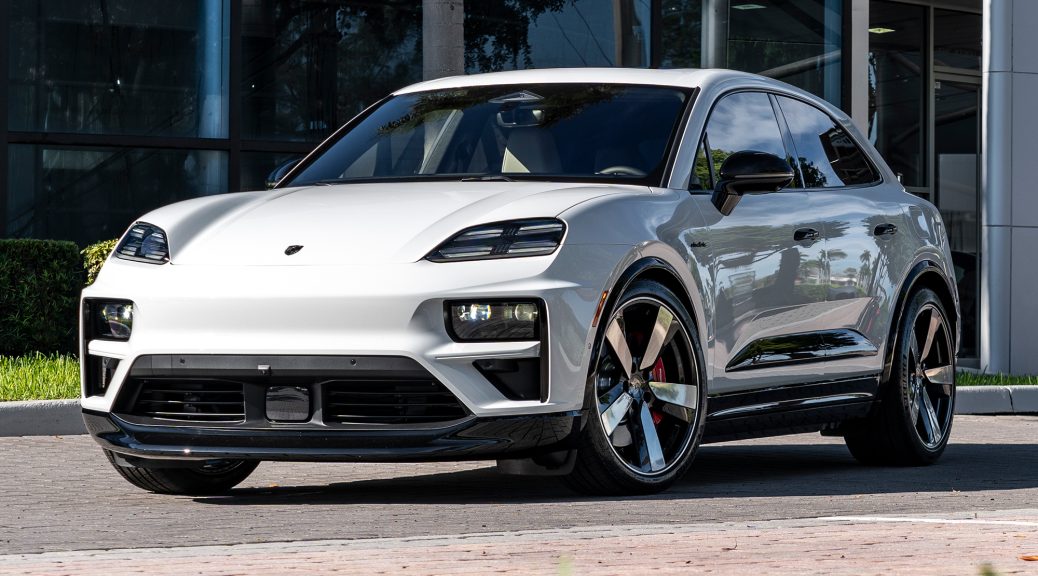
Porsche Macan (2019–2024 Used or 2026 New)
Why It Wins: Usable back seats, all-weather capability, Porsche dynamics in SUV form
Specifications (Macan Base):
- Engine: 2.0L turbo inline-4, 261 hp / 295 lb-ft
- Transmission: 7-speed PDK (all years)
- Weight: 4,199 lbs
- 0–60 mph: 5.0 seconds (C/D tested)
- New Price: $65,400+ (2026)
- Used Price: $42,000–$55,000 (2019–2022, 25,000–45,000 miles)
The Experience:
The Macan defies physics. No 4,200-pound vehicle should corner this flat, steer this precisely, or transmit this much road feel. Porsche’s PASM adaptive suspension (standard on S, optional on base) transforms the Macan from luxury crossover to sports sedan on stilts.
The 2.0L four-cylinder lacks the charisma of Porsche’s flat-six engines, but the PDK transmission’s rapid-fire shifts and the chassis’ competence compensate. For daily commuting, school runs, and occasional canyon carving, the Macan delivers 90% of Porsche dynamics with 200% of the usability.
First Porsche Verdict: The practical choice that doesn’t feel like compromise. The Macan’s depreciation curve has flattened; used examples offer strong value. For 2026, the final gasoline models provide proven technology before the electric transition.
Avoid: Base models without PASM (harsh ride, excessive body roll); any Macan without documented PDK service every 40,000 miles.
Porsche Cayenne (2019–2024 Used or 2026 New)
Why It Wins: Full-size luxury, towing capability, and sports-car DNA in an SUV that actually fits a family
Specifications (Cayenne Base):
- Engine: 3.0L turbo V6, 348 hp / 368 lb-ft (2026)
- Transmission: 8-speed Tiptronic S (all years)
- Weight: 4,663 lbs
- 0–60 mph: 5.9 seconds (base), 4.7 seconds (S)
- New Price: $86,800+ (2026) ; $84,700+ (2025)
- Used Price: $52,000–$72,000 (2019–2023, 25,000–45,000 miles)
The Experience:
The Cayenne is where Porsche proved SUVs could be sports cars. Introduced in 2003 against purist outrage, it became the brand’s best-seller and the vehicle that funded the 911’s continued evolution. The current generation—particularly post-2019 facelift models—represents the maturation of that philosophy.
What separates the Cayenne from the Macan is scale and serenity. The cabin accommodates adults in both rows with genuine comfort. The cargo area swallows golf bags, road-trip luggage, or 7,700 pounds of trailer (when properly equipped). The 3.0L turbo V6 provides effortless highway passing without the manic urgency of smaller engines.
Porsche’s 4D Chassis Control integrates PASM, PDCC (Porsche Dynamic Chassis Control), and rear-axle steering into a cohesive system that shrinks the Cayenne around you. In Sport Plus mode, the air suspension lowers, the transmission holds gears to redline, and the exhaust valves open—transforming a luxury SUV into something that embarrasses sports cars on winding roads.
First Porsche Verdict: The Cayenne is the choice for buyers who need one vehicle to do everything. It handles the school run on Tuesday and the mountain road on Saturday. Used Cayennes offer exceptional value—the first owner absorbs 30–35% depreciation, leaving a meticulously engineered vehicle at a fraction of MSRP. For South Florida drivers, the Cayenne’s size and presence command respect in valet lines and beach parking alike.
Avoid: Early 2019 models with base steel suspension (harsh over broken pavement); any Cayenne without documented air suspension service history (if equipped); base models missing the Premium Package (keyless entry, Bose audio, panoramic roof).
Porsche Taycan (2021–2024 Used)
Why It Wins: Electric immediacy, futuristic interior, daily usability
Specifications (Taycan Base):
- Power: 402 hp (overboost), 254 lb-ft continuous
- Battery: 79.2 kWh usable
- Range: 252–318 miles EPA (varies by trim and battery)
- 0–60 mph: 4.1 seconds (C/D tested, base RWD)
- New Price: $102,550+ (2026) ; $105,800+ (2025)
- Used Price: $55,000–$75,000 (2021–2023, 15,000–35,000 miles)
The Experience:
The Taycan redefines acceleration. Electric torque—immediate, silent, violent—makes the base model feel quicker than its 4.1-second 0–60 suggests. The 800-volt architecture enables up to 320 kW DC fast charging, adding significant range in under 20 minutes under ideal conditions .
Range anxiety is real but overstated. The Taycan’s EPA ratings understate real-world capability (330 miles in C/D highway testing for the 4S) , but highway speeds and cold weather extract penalties. Home charging (Level 2, 11 kW) is essential; without it, the Taycan becomes a burden.
First Porsche Verdict: The future-forward choice for tech-forward buyers. Used Taycans have depreciated 40–50% from MSRP, creating value opportunities. Ensure home charging capability before purchase.
Avoid: Early 2020 models with software teething issues; any Taycan without verified battery health report.
Category 3: The Aspirational Classic
Porsche 911 Carrera (997.2, 2009–2012 Used)
Why It Wins: The last naturally aspirated base 911 before turbocharging, analog driving experience, appreciating values
Specifications (997.2 Carrera):
- Engine: 3.6L naturally aspirated flat-6, 345 hp / 288 lb-ft
- Transmission: 6-speed manual or 7-speed PDK
- Weight: 3,075 lbs
- 0–60 mph: 4.5 seconds (PDK)
- Used Price: $55,000–$75,000 (40,000–80,000 miles)
The Experience:
The 997.2 represents Porsche’s analog peak. Hydraulic steering, naturally aspirated engine, minimal electronic intervention. The 3.6L engine revs to 7,200 rpm with a mechanical soundtrack no turbo can replicate.
This is not a daily driver for novices. The 997.2 demands mechanical sympathy: annual oil changes, clutch replacement every 60,000 miles, potential IMS bearing concerns (though 997.2s are less susceptible than 997.1s). Budget $4,000–$6,000 annually for maintenance.
First Porsche Verdict: For enthusiasts who prioritize experience over convenience. The 997.2 teaches driving fundamentals that modern Porsches obscure with technology. Values have stabilized; clean examples appreciate.
Avoid: 997.1 (2005–2008) with known IMS bearing failures; any 997 without documented service history; automatic transmission (PDK is excellent, but the manual defines the experience).
The Mistakes First-Time Buyers Make
Mistake 1: Buying Power Over Balance
The Trap: “I’ll grow into a Turbo/GTS.”
The Reality: 500+ horsepower in a rear-engine sports car punishes inexperience. The learning curve is steep, expensive, and potentially dangerous. A base 911 or Cayman provides more performance than public roads allow.
Better Path: Master a base or S model. Upgrade after 24 months of ownership.
Mistake 2: Ignoring Maintenance History
The Trap: “It’s a Porsche—it’ll be fine.”
The Reality: Deferred maintenance compounds. A $2,000 skipped service becomes a $8,000 engine repair. Porsches reward obsessive care and punish neglect.
Better Path: Budget $2,500–$4,000 annually for maintenance. Buy only with documented service history. Pre-purchase inspection at a Porsche dealer is non-negotiable.
Mistake 3: Prioritizing Badge Over Experience
The Trap: “I need a 911 or it’s not a real Porsche.”
The Reality: The 718 Cayman handles better than a base 911. The Macan offers more daily usability. The Cayenne delivers sports-car DNA with genuine utility. The “entry-level” Porsche myth ignores that every Porsche is engineered to the same standard.
Better Path: Drive 718, 911, Macan, and Cayenne back-to-back. The “lesser” model often surprises.
Mistake 4: New Car Depreciation
The Trap: “I’ll lease new to avoid maintenance.”
The Reality: New Porsche depreciation is brutal—20–25% in year one. Leasing requires excellent credit, substantial down payments, and locks you into 36+ months of payments.
Better Path: Certified Pre-Owned (CPO) provides warranty coverage without the depreciation hit. A 2–3 year old Porsche with 20,000 miles offers 90% of new at 70% of the cost.
The Champion Porsche First-Timer Program
At Champion Porsche in Pompano Beach, we specialize in first-time Porsche buyers. Our process:
- Consultation: We assess your driving profile, budget, and priorities
- Test Drive Matrix: Back-to-back comparisons of 3–4 models
- Pre-Purchase Inspection: 111-point evaluation on any used Porsche
- CPO Certification: 2-year/unlimited-mile warranty on qualified used models
- Education: Porsche Track Experience vouchers, maintenance training, owner events
The Verdict: Which First Porsche?
| Your Profile | Best First Porsche | Why |
|---|---|---|
| Driving enthusiast, occasional track days | 718 Cayman (used, 2019+) | Mid-engine balance, affordable limits, PDK excellence |
| Daily driver, family needs, urban size | Macan S (used, 2019–2022) | Usability without compromise, proven reliability |
| Daily driver, family needs, full-size luxury | Cayenne (used, 2019–2023) | Maximum utility with sports-car DNA, commanding presence |
| Classic Porsche experience | 911 Carrera (991.2, 2017–2019) | Authentic rear-engine character, modern reliability |
| Tech-forward, home charging | Taycan (used, 2021–2023) | Electric performance, depreciated value |
| Analog purist, mechanical engagement | 911 Carrera (997.2, 2009–2012) | Naturally aspirated, hydraulic steering, investment potential |
The best first Porsche is the one you’ll drive. Not the one that impresses neighbors. Not the one with the most horsepower. The one that fits your life, your budget, and your definition of driving joy.
At Champion Porsche, we don’t sell cars. We introduce enthusiasts to a 75-year tradition. Your first Porsche is waiting.
Champion Porsche
500 W Copans Rd, Pompano Beach, FL 33064
(954) 946-9040 | [View First-Timer Inventory]
Frequently Asked Questions
What is the best first Porsche for a daily driver with a family?
The Porsche Cayenne is the best first Porsche for daily family use. Unlike the Macan, which is sized for urban agility, the Cayenne offers genuine adult space in both rows, 7,700-pound towing capacity, and a cabin that accommodates real life without compromise. The 3.0L turbo V6 delivers 348 hp and 368 lb-ft , providing effortless power for highway merging, while PASM air suspension transforms the ride from luxury cruiser to canyon carver. Used 2019–2023 Cayennes have depreciated 30–35% from MSRP, making them exceptional value for first-time buyers who refuse to sacrifice performance for practicality.
Is a used Porsche Cayenne reliable for a first-time owner?
Yes—2019 and newer Cayennes are highly reliable for first-time Porsche owners. The third-generation (post-2018) resolved earlier concerns with timing chain and air suspension durability. The 8-speed Tiptronic S transmission is shared with Audi and Volkswagen Group vehicles, meaning parts and service expertise are widely available. Budget $1,800–$2,800 annually for maintenance (slightly more than a Macan due to size and complexity), and insist on documented service history. A pre-purchase inspection at Champion Porsche covers the 111-point evaluation, including air suspension integrity, transfer case function, and brake system condition.
Should I buy a Porsche Macan or Cayenne as my first Porsche?
Buy the Macan if you prioritize urban maneuverability, tighter parking spaces, and a sportier driving feel—the Macan’s 4,200-pound chassis and PDK transmission make it feel like a hot hatch on stilts. Buy the Cayenne if you need full-size luxury, genuine rear passenger comfort, towing capability, or the commanding road presence that South Florida traffic demands. The Cayenne starts at $86,800 MSRP for 2026 , while the Macan starts at $65,400 . The Cayenne’s 8-speed automatic is smoother for highway cruising, while the Macan’s PDK is more engaging on back roads. Both depreciate predictably; both reward CPO purchase. Drive both at Champion Porsche—the decision often becomes obvious within the first mile.
What is the cheapest Porsche to maintain for a first-time buyer?
The Porsche Macan is the cheapest to maintain among current Porsche models, with annual costs averaging $1,000–$1,800. The 2.0L turbo inline-4 shares components with Audi, keeping parts costs reasonable. The 718 Cayman follows closely at $1,500–$2,500 annually, though its mid-engine layout increases labor costs for major services. The Cayenne runs $1,800–$2,800 annually—higher than the Macan due to complexity and size, but lower than any 911. Avoid early 911s (997.1, 991.1) as a first purchase; their maintenance demands punish inexperienced owners.
Can a Porsche Cayenne be a good first sports car?
The Cayenne is not a sports car in the traditional sense, but it is the best sports-car-infused SUV for first-time Porsche buyers. Porsche’s 4D Chassis Control, optional PDCC, and rear-axle steering create handling dynamics that embarrass many dedicated sports cars. The Cayenne S (0–60 in 4.7 seconds) accelerates faster than a 718 Cayman base model. For buyers who can only own one vehicle and refuse to compromise, the Cayenne delivers 85% of Porsche’s sports-car DNA with 300% of the utility. It is the choice for pragmatists who still want to feel alive on Saturday morning drives through the Florida Keys.