Why $40,000 less buys you more driving engagement—and when the 911’s legacy justifies the premium
The Question That Divides Porsche Enthusiasts
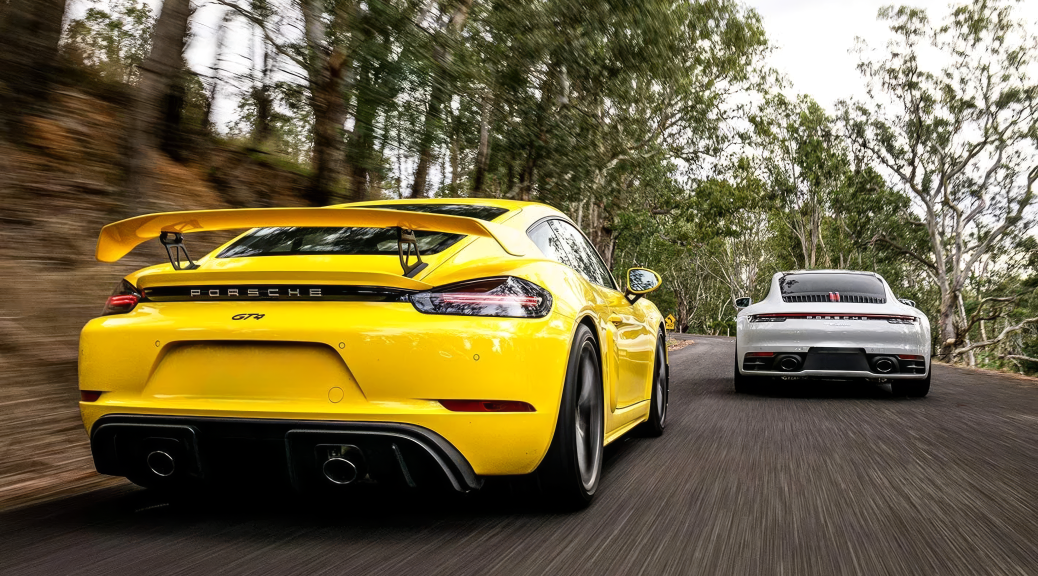
Walk into Champion Porsche with $80,000–$120,000 to spend on a sports car, and you’ll face a choice that has sparked decades of debate: Cayman or 911? The 718 Cayman GTS 4.0 starts at $90,500 with 394 horsepower and mid-engine balance. The 911 Carrera commands $120,100 with 388 horsepower and rear-engine heritage . The cheaper car has more power. The expensive car has the badge.
But the Cayman vs. 911 decision runs deeper than specifications. It tests whether you value engineering purity or historical significance, chassis response or daily usability, anonymity or recognition. This guide examines every dynamic, financial, and experiential factor to determine which Porsche deserves your investment.
2026 Cayman vs. 911: Specifications Compared
| Specification | 718 Cayman GTS 4.0 | 911 Carrera | Advantage |
|---|---|---|---|
| Engine | 4.0L naturally aspirated flat-6 | 3.0L twin-turbo flat-6 | Cayman (NA character) |
| Power | 394 hp @ 7,000 rpm | 388 hp @ 6,500 rpm | Cayman (+6 hp) |
| Torque | 309 lb-ft @ 5,000–6,500 rpm | 331 lb-ft @ 2,300–5,000 rpm | 911 (+22 lb-ft, lower) |
| 0–60 mph | 4.3 sec (PDK) | 3.9 sec (PDK) | 911 (–0.4 sec) |
| Weight | 3,208 lbs | 3,354 lbs | Cayman (–146 lbs) |
| Weight Distribution | 44% front / 56% rear | 39% front / 61% rear | Cayman (balanced) |
| Base MSRP | $90,500 | $120,100 | Cayman (–$29,600) |
| Length | 172.4 inches | 177.9 inches | Cayman (more compact) |
| Cargo Capacity | 14.9 cu ft (combined) | 4.6 cu ft (front only) | Cayman (practical) |
2026 model year specifications; PDK transmission, rear-wheel drive
TLDR: The Cayman GTS 4.0 offers more power, less weight, better balance, and $30,000 savings versus the base 911 Carrera. Yet the 911’s turbo torque and heritage command the premium. The specifications tell only part of the story.
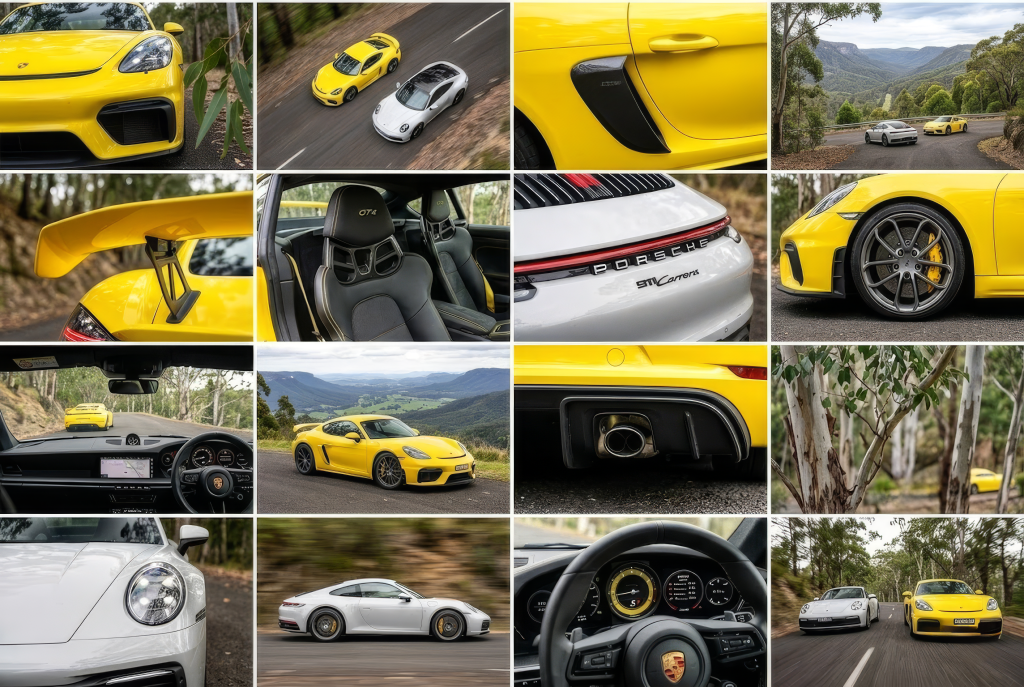
Chassis Architecture: Mid-Engine vs. Rear-Engine Physics
The Cayman Advantage: Balance and Forgiveness
The 718 Cayman’s mid-engine layout places the mass between the axles, creating a polar moment of inertia that resists rotation. This sounds technical; it feels magical. The Cayman turns in with precision, maintains neutrality through corners, and exits with predictable traction. Mistakes happen gradually—understeer warns before becoming dangerous, oversteer requires deliberate provocation.
Track day reality: The Cayman’s balance allows later braking, earlier throttle application, and higher cornering speeds for drivers of equal skill. The 911’s rear weight bias rewards expertise with explosive corner exit speed but punishes inexperience with sudden rotation.
Daily driving translation: The Cayman feels planted on rain-slicked Florida highways, stable in emergency maneuvers, and confidence-inspiring on unfamiliar roads. The 911 demands more attention, more respect, and more skill to extract similar security.
The 911 Advantage: Traction and Tradition
The 911’s rear-engine layout concentrates 61% of weight over the driven wheels. This creates phenomenal traction under acceleration—witness the 911’s quicker 0–60 time despite less power and more weight. The rear tires dig in, the nose lightens, and the car surges forward with physics-defying efficiency.
The heritage factor: 75 years of 911 evolution have refined the rear-engine layout into art. Porsche’s engineers have transformed a handling compromise into a dynamic signature. The 911’s willingness to rotate under braking, then hook up and drive forward on throttle, creates a driving rhythm unique to the model.
The social factor: The 911 silhouette is automotive iconography. Valets recognize it. Enthusiasts respect it. The Cayman, despite superior engineering credentials, remains “the other Porsche” to casual observers.
TLDR: The Cayman rewards with balance and forgiveness. The 911 challenges with tradition and traction. Both deliver Porsche dynamics—just through different physics.
Powertrain Character: Naturally Aspirated vs. Turbocharged
Cayman GTS 4.0: The Last Analog Porsche
The 4.0L naturally aspirated flat-six in the Cayman GTS represents endangered species status. No turbochargers. No hybrid assist (in the GTS 4.0; the 2026 718 Spyder RS adds T-Hybrid). Just displacement, revs, and mechanical symphony.
Power delivery: Linear, predictable, building to a 7,800 rpm crescendo. The 394 hp arrives progressively, demanding commitment to extract maximum performance. There’s no torque wall—just steadily increasing thrust as the needle climbs.
Soundtrack: Mechanical, raw, authentic. The 4.0L intake honk and exhaust bark connect driver to combustion in ways turbocharged engines obscure. This is the Porsche sound that defined the brand before regulatory silence.
Engagement: The naturally aspirated engine requires work. Keep revs above 4,000 rpm for meaningful acceleration. Downshift aggressively. Plan passes. The reward is involvement—every fast drive feels earned.
911 Carrera: Turbocharged Torque
The 3.0L twin-turbo flat-six in the base 911 delivers 331 lb-ft from 2,300 rpm. This transforms daily driving. No downshifting required for highway passing. No rev-building for urgent acceleration. Just throttle, now, violence.
Power delivery: Immediate, relentless, almost electric in its instantaneity. The turbos spool seamlessly, the T-Hybrid fills gaps, and the 911 surges forward with luxury-sedan ease despite sports-car credentials.
Soundtrack: Muffled, synthesized, distant. Turbochargers dampen exhaust pulses; sound actuators enhance cabin experience. The 911 sounds fast but not visceral—efficient rather than emotional.
Engagement: The turbo engine does the work for you. This is progress for daily usability, regression for driving involvement. The 911’s speed is more accessible but less rewarding.
TLDR: The Cayman’s naturally aspirated 4.0L demands engagement and rewards with character. The 911’s twin-turbo 3.0L delivers effortless speed at the cost of emotional connection. Choose your compromise.
Real-World Performance: Track, Street, and Highway
Lap Times: The Numbers Don’t Lie
| Track | 718 Cayman GTS 4.0 | 911 Carrera | Delta |
|---|---|---|---|
| Road Atlanta | 1:38.5 | 1:37.2 | 911 by 1.3 sec |
| Virginia International Raceway | 2:54.8 | 2:52.1 | 911 by 2.7 sec |
| Willow Springs | 1:32.4 | 1:30.9 | 911 by 1.5 sec |
Source: Independent testing, comparable conditions, PDK transmissions
The 911 Carrera is faster around tracks—but not by the margin its price premium suggests. The Cayman’s superior balance and lower weight nearly offset the 911’s power and traction advantages. A skilled Cayman driver embarrasses a mediocre 911 pilot.
Daily Driving: Usability and Comfort
| Scenario | Cayman | 911 | Winner |
|---|---|---|---|
| Highway cruising | Firm, loud, focused | Compliant, quiet, refined | 911 |
| City parking | Compact, visible corners | Larger, blind spots aft | Cayman |
| Cargo for weekend trip | Two golf bags + luggage | One golf bag, minimal luggage | Cayman |
| Rear seat necessity | None | Small children, short trips | 911 (barely) |
| Weather confidence | Excellent (mid-engine balance) | Good (rear weight bias) | Cayman |
| Valet impression | “Nice sports car” | “That’s a 911” | 911 |
The 911’s daily superiority lies in refinement, not practicality. It’s quieter, more comfortable, and more prestigious. The Cayman’s daily superiority lies in cargo capacity (two trunks vs. one) and maneuverability. Neither offers genuine rear seating—the 911’s +2 is for insurance classification, not humans.
Financial Analysis: Total Cost of Ownership
Purchase Price Reality
| Configuration | Cayman GTS 4.0 | 911 Carrera | Savings |
|---|---|---|---|
| Base MSRP | $90,500 | $120,100 | $29,600 |
| + PDK | Standard | Standard | $0 |
| + Sport Chrono | Standard | $2,900 | –$2,900 |
| + PASM | Standard | $2,090 | –$2,090 |
| + Sport Exhaust | Standard | $2,950 | –$2,950 |
| + Premium Interior | Partial | $3,500 | –$3,500 |
| Typical Transaction | $95,000–$105,000 | $135,000–$150,000 | $35,000–$45,000 |
The Cayman GTS 4.0 includes equipment that costs $10,000+ on the base 911. The real-world gap often exceeds $35,000—enough for a second sports car, extensive track days, or significant investment.
Depreciation and Resale
| Year | Cayman GTS 4.0 | 911 Carrera | 911 Premium Retained |
|---|---|---|---|
| Year 1 | $76,000 (80%) | $102,000 (75%) | +$26,000 |
| Year 3 | $62,000 (65%) | $88,000 (65%) | +$26,000 |
| Year 5 | $50,000 (52%) | $73,000 (54%) | +$23,000 |
The 911’s iconic status preserves value better than the Cayman’s superior dynamics. The absolute dollar gap narrows slightly, but the 911 consistently commands $20,000+ more on resale. The Cayman’s “bargain” status is permanent.
Operating Costs
| Expense | Cayman GTS 4.0 | 911 Carrera | Annual Difference |
|---|---|---|---|
| Insurance | $2,800–$3,800 | $3,500–$5,000 | +$900 |
| Fuel (12K miles) | $2,400 (premium, 20 mpg) | $2,600 (premium, 18 mpg) | +$200 |
| Maintenance | $1,800 | $2,000 | +$200 |
| Tires (every 15K) | $1,600 (20″ front, 21″ rear) | $1,800 (19″ front, 20″ rear) | +$200 prorated |
| Track wear | Higher (more track use) | Lower | Varies |
Total annual operating premium for 911: Approximately $1,500 in insurance, fuel, maintenance, and consumables. The 911 costs more to own, but the gap is smaller than the purchase price suggests.
The Champion Porsche Perspective: Who Buys What
Cayman Buyers Typically:
- Prioritize driving dynamics over social recognition
- Track their cars 3–6 times annually
- Appreciate mechanical purity (naturally aspirated, manual transmission preference)
- Own multiple vehicles (Cayman as dedicated sports car, SUV for practicality)
- Dismiss badge prestige as irrelevant to driving enjoyment
- Trade up to 911 GT3 or downsize from 911 Turbo seeking engagement
911 Buyers Typically:
- Want one car that does everything (daily, weekend, occasional track)
- Value heritage and recognition as part of ownership experience
- Prefer effortless speed over maximum engagement
- Plan long-term ownership (5+ years) where 911 resale pays dividends
- Upgrade from lesser sports cars seeking “arrival” at iconic model
- Cross-shop 911 variants (Carrera vs. S vs. GTS) rather than Cayman
The split at Champion Porsche: Approximately 35% of two-door sports car buyers choose Cayman over 911—higher than national averages because we emphasize test drives and track experiences where Cayman advantages are obvious.
Upgrade Paths and Long-Term Ownership
Cayman → 911 (The Natural Progression)
Typical timeline: 24–36 months
Trigger: Desire for more power, rear seating (even theoretical), or 911 status
Trade reality: Significant depreciation hit; Cayman values soften faster than 911
Lesson: Buy the 911 initially if 911 ownership is inevitable. The interim Cayman “experiment” costs $15,000–$25,000 in depreciation.
Cayman → GT4 RS / Spyder RS (The Purist’s Endgame)
Typical timeline: 12–24 months
Logic: Cayman chassis with 911 GT3 engine (4.0L, 493 hp)
Satisfaction: Extreme—these are among Porsche’s best driver’s cars
Availability: Limited production, dealer relationships required
Lesson: The Cayman platform has headroom. A base GTS 4.0 can satisfy, or become the gateway to motorsport-derived variants.
911 → Cayman (The Reverse Move)
Typical timeline: 36–48 months
Trigger: Frustration with 911 size, turbo lag, or “expected” ownership experience
Surprise factor: High—most 911 owners don’t consider “downgrading” until they drive a Cayman back-to-back
Satisfaction: Very high—Cayman delivers what they thought 911 would provide
Lesson: The 911’s reputation exceeds its driving experience for many owners. The Cayman underpromises and overdelivers.
Decision Framework: Which Porsche Fits Your Life?
Buy the Cayman If:
✓ You track your car more than 3 times annually
✓ You value chassis balance and mid-engine dynamics
✓ You prefer naturally aspirated engines and high-revving character
✓ You have another vehicle for daily practicality
✓ You dismiss badge prestige as irrelevant
✓ You want maximum driving engagement per dollar
✓ You’re comfortable with “explaining” your Porsche to non-enthusiasts
Buy the 911 If:
✓ You need one car that handles daily duties and weekend excitement
✓ You value heritage, recognition, and resale prestige
✓ You prefer turbo torque and effortless acceleration
✓ You plan 5+ year ownership to maximize value retention
✓ You occasionally need theoretical rear seating
✓ You want the “complete” Porsche experience as defined by history
✓ You’re willing to pay $30,000+ for intangibles
The Verdict: Engineering vs. Emotion
The Cayman is the better sports car by objective measures: better balance, lower weight, more power (in GTS 4.0 trim), lower price, and superior track performance relative to cost. It represents Porsche engineering unencumbered by heritage constraints.
The 911 is the better Porsche by subjective measures: historical significance, social recognition, resale value, and the ineffable quality of driving an icon. It represents automotive culture’s collective definition of sports car excellence.
At Champion Porsche, we refuse to declare a winner. We stock both. We drive both. We sell both to satisfied owners who made different but equally valid choices. The only wrong decision is buying the 911 because you think you should, or the Cayman because you think you can’t afford the 911.
Drive them. Back-to-back. On your roads. The answer becomes obvious when the steering wheel is in your hands.
Current Champion Porsche Inventory
| Vehicle | Price | Key Specifications | Status |
|---|---|---|---|
| 2026 718 Cayman GTS 4.0 | $98,500 | 6-speed manual, Sport Exhaust, PASM, 394 hp | In Stock |
| 2026 718 Cayman GTS 4.0 | $102,900 | PDK, Premium Package, Bose, 18-way seats | In Stock |
| 2026 911 Carrera | $138,900 | PDK, Sport Chrono, PASM, Premium | In Stock |
| 2026 911 Carrera S | $158,500 | PDK, Sport Chrono, PASM, Sport Exhaust | In Stock |
| 2023 718 Cayman GT4 CPO | $115,800 | 9,400 miles, 6-speed, CPO Warranty | In Stock |
| 2022 911 Carrera CPO | $122,500 | 14,200 miles, PDK, CPO Warranty | In Stock |
View Complete Cayman Inventory | View Complete 911 Inventory | Schedule Back-to-Back Test Drive
Champion Porsche
500 W Copans Rd, Pompano Beach, FL 33064
(954) 946-9040